
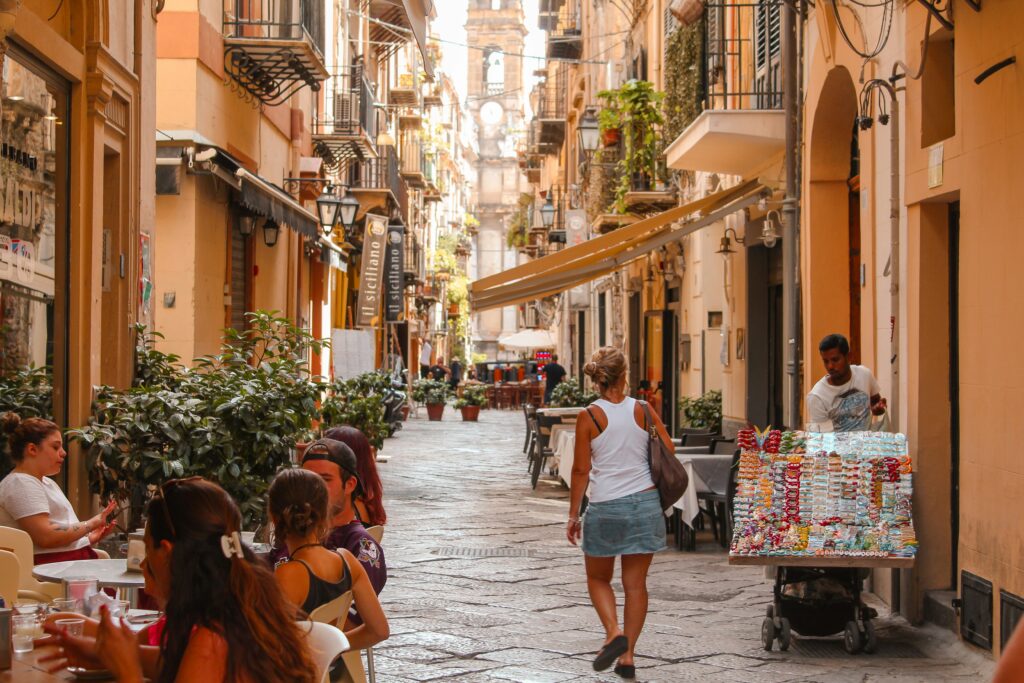
Beyond its stone buildings, medieval streets, and dramatic mountain setting, L’Aquila reveals its true soul through everyday life. The city’s character is shaped not only by history and geography, but by the way people cook, gather, celebrate, and carry traditions forward. Rooted in rural heritage and mountain living, local culture values simplicity, quality, and continuity. Life here is not rushed, not curated for visitors, and not overly polished—it is lived honestly, day by day.
To understand L’Aquila, one must look beyond monuments and landscapes and instead sit at a family table, stroll through a neighborhood piazza, or attend a local festival where centuries-old customs are still alive.
A Cuisine Born in the Mountains
L’Aquila’s cuisine is inseparable from its environment. Surrounded by high-altitude plateaus and grazing land, the city developed a food culture based on nourishment, sustainability, and respect for ingredients. For centuries, shepherds and farmers relied on meals that were filling, warming, and made from what the land could provide. This practical origin remains at the heart of local cooking today.
Lamb is central to the regional diet and appears in countless preparations, from slow-cooked stews to simple grilled cuts seasoned only with olive oil, rosemary, and salt. The focus is never on heavy sauces or elaborate presentation, but on letting the natural flavor of high-quality meat shine. This minimalist approach reflects a broader philosophy of cooking in L’Aquila: do little, but do it well.
Cheeses made from sheep’s milk, cured meats, and seasonal vegetables round out meals that feel deeply connected to the rhythms of the countryside.
Saffron and the Flavors of Abruzzo
One of the most prized ingredients associated with L’Aquila is saffron, cultivated on the nearby Navelli Plateau. This area produces some of Italy’s finest saffron, known for its vivid color and intense aroma. Harvested by hand in autumn, saffron is treated with reverence, used sparingly to elevate both savory and sweet dishes.
It appears in creamy risottos, delicate sauces, and traditional desserts, lending a subtle richness that defines local flavor. For residents, saffron is more than a spice—it is a symbol of heritage, patience, and craftsmanship passed down through generations.
The use of saffron also reflects the broader culinary identity of the region, where ingredients are chosen not for novelty, but for their connection to place.
Pasta, Bread, and Comfort Foods
Homemade pasta plays a central role in daily meals, especially dishes prepared for family gatherings and holidays. One of the most iconic local varieties is maccheroni alla chitarra, named after the stringed tool used to cut the dough into square strands. The pasta’s firm texture makes it ideal for rich sauces, particularly lamb ragù or slow-simmered meat sauces that develop deep flavor over time.
Bread is another essential element of the local table. Rustic loaves with thick crusts are designed to last several days, often used to soak up sauces or accompany simple meals of legumes and vegetables. Lentils, chickpeas, and spelt feature prominently, reflecting a cuisine built on humble, nourishing staples.
These comfort foods tell the story of a community that learned to make the most of what it had, turning simplicity into something deeply satisfying.
Festivals and Sacred Traditions
Traditions in L’Aquila are not confined to museums or history books—they are lived experiences that mark the passage of time. Religious and cultural festivals remain central to community life, blending faith, history, and collective memory.
The most significant event of the year is the Perdonanza Celestiniana, held every August. This historic celebration, rooted in medieval tradition, centers on themes of forgiveness and peace. Processions, ceremonies, and gatherings bring together locals and visitors alike, filling the city with a sense of shared purpose and reflection.
Throughout the year, smaller festivals take place in neighborhoods and nearby villages, often dedicated to patron saints or local products. These events feature music, traditional dress, food stalls, and rituals that feel intimate rather than staged. Attending one offers a rare glimpse into Abruzzo’s living folklore.
Daily Life and the Rhythm of the City
Life in L’Aquila moves at a deliberate, unhurried pace. Mornings begin with espresso at neighborhood cafés, where locals exchange greetings and catch up on news. Shops open gradually, and conversations often last longer than planned.
In the late afternoon and evening, the passeggiata—the traditional stroll through town—becomes a daily ritual. Families, couples, and friends walk through piazzas and along historic streets, stopping to talk, laugh, and simply be present. These moments are not about productivity or schedules, but about connection.
There is a strong sense of community, where neighbors know one another and relationships span generations. Traditions are passed down through stories, shared meals, and everyday habits rather than formal instruction.
Resilience and Identity
L’Aquila’s recent history has shaped its modern identity in profound ways. Hardship and rebuilding have reinforced the importance of solidarity and collective strength. Rather than erasing tradition, these challenges have deepened the city’s connection to its roots.
Food, festivals, and daily rituals have become anchors of normalcy and pride. Gathering around the table or celebrating long-held traditions is not just cultural—it is a statement of continuity and resilience.
This strength is felt quietly, not loudly, in the way people support one another and protect what makes their city unique.
Why Culture in L’Aquila Feels Different
What truly sets L’Aquila apart is its authenticity. There is no performance for visitors, no attempt to reshape local life to fit expectations. Culture here exists whether anyone is watching or not.
Visitors who take the time to slow down, share a meal, attend a local festival, or simply observe daily routines discover a side of Italy that feels deeply real. It is not the Italy of postcards or hurried itineraries, but one defined by relationships, tradition, and a strong sense of place.
In L’Aquila, food, traditions, and daily life are not separate experiences—they are threads of the same story, woven together over centuries and still unfolding today.